VisualWeb Insights for performance-led UK websites
Explore how our web design agency plans bespoke websites for UK businesses, blends Tailwind design systems with modern development, and delivers measurable website optimisation, Local SEO, and launch readiness. Every section below is written for decision makers who expect detail, accountability, and a clear path to results.
Bespoke delivery across design, build, optimisation, and care
We build websites that look intentional, load fast, and convert. Every service combines commercial strategy, modern tooling, and British English copywriting so your brand feels consistent from the first pitch deck to the live experience.
Conversion readiness
Messaging and UX validated pre-build
Technical quality
CI, linting, and accessibility baked in
SEO 2025-ready
Schema-rich pages with clean IA
UX
Web Design
UX mapping and interface design in Figma with reusable component libraries.
Responsive breakpoints tuned to mobile-first journeys and conversion paths.
Accessibility-first patterns meeting WCAG 2.2 AA with consistent focus states.
Design systems, tokens, and annotated specs for smooth handover to engineering.
Interactive prototypes to validate flows with stakeholders before build.
VisualWeb plans every layout around your commercial story and the jobs your visitors need to complete. We balance pace with craft so the interface stays calm even when content is dense. Our designers collaborate directly with strategists to keep messaging sharp, while accessibility and localisation ensure the site speaks clearly to UK audiences on any device.
DEV
Web Development
React and Next.js builds with Tailwind CSS for design-system parity.
Headless CMS setups (Sanity, Contentful) with structured content models and roles.
API integrations for CRMs, booking engines, payments, and marketing automation.
Clean architecture with linting, testing, and CI for dependable releases.
Edge-ready deployments with CDN caching strategies and ISR where relevant.
Our engineering team ships reliable, flexible front-ends that handle campaign peaks without breaking. We keep codebases lean, documented, and typed where needed so future enhancements are safe. Content editors receive a CMS that mirrors the design language, while development environments and CI pipelines keep releases predictable for every stakeholder.
SEO
SEO and Performance
Technical SEO audits covering crawl health, redirects, and structured data.
Core Web Vitals tuning for LCP, CLS, and INP with real-user monitoring.
Local SEO landing pages and GBP optimisation for service areas across the UK.
Schema markup, JSON-LD, and metadata aligned to your content strategy.
Performance budgets with image optimisation, code splitting, and caching rules.
We prioritise website optimisation from the start, so design choices never compromise speed. Every release includes a Core Web Vitals check, structured data validation, and on-page SEO that reads naturally in British English. Clients receive clear reporting on visibility, rankings, and conversions so investment is easy to justify to your leadership team.
Care
Hosting and Aftercare
Managed NVMe hosting in UK datacentres with SSL, WAF, and daily backups.
24/7 uptime monitoring, alerting, and incident playbooks for critical journeys.
Security patching, dependency updates, and penetration test remediation.
Content governance and release calendars for campaigns and seasonal peaks.
Performance reviews with actionable sprints to keep speeds and conversions rising.
Our aftercare team keeps your site stable and current long after launch. We manage hosting, scaling, and patching so your internal teams focus on marketing. Monthly review calls cover uptime, change requests, and optimisation backlogs, ensuring every iteration protects conversions and search visibility.
Process
How we deliver predictable, high-performing websites
We follow a transparent methodology that keeps stakeholders aligned from discovery to post-launch optimisation. Each phase has clear outputs so you always know what is in progress, approved, and deployed.
Discovery and Strategy
Workshops surface goals, KPIs, user journeys, and technical constraints. We define governance, decision makers, and a measurement plan before design begins.
Brand and UI Design
We build a UI kit with typography, colour, spacing, and component states that mirror your brand. Interactive prototypes are tested with key stakeholders for clarity and conversion.
Technical Build
We develop in Next.js with Tailwind CSS and a headless CMS, keeping content models flexible. CI pipelines enforce code quality and enable rapid previews for sign-off.
Launch and QA
Regression, accessibility, and device testing are completed alongside performance checks. We manage DNS, CDN, redirects, and rollback plans to control risk on launch day.
Support and Iteration
We monitor uptime, conversions, and Core Web Vitals, then schedule iterative sprints. Content updates, experiments, and optimisation stay aligned to your revenue goals.
Resource Library
Guides and frameworks you can use immediately
Every download is written for marketing leads and founders who need to justify spend, direct teams, and keep launches controlled. No fluff, just practical steps we use with clients.
Key Metric: Zero post-launch downtime
Updated Nov 2024
Launch
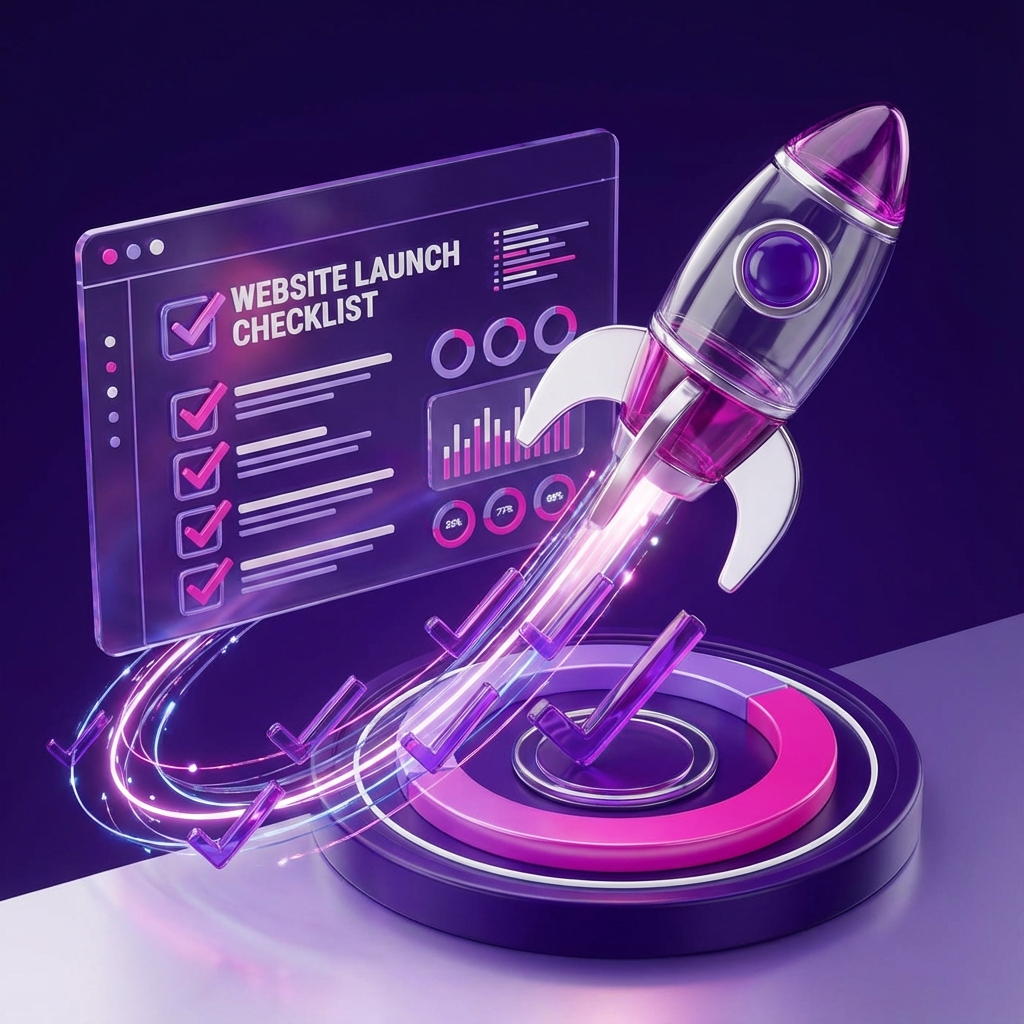
The 2024 Website Launch Checklist
An eight-phase checklist covering planning, technical readiness, accessibility, performance, analytics, and launch controls.
The 2024 Website Launch Checklist for UK Businesses
This is the exact process we run at VisualWeb when launching bespoke websites for UK organisations. It keeps stakeholders aligned, removes launch-day surprises, and protects Core Web Vitals and SEO equity from day one.
Who this is for
Marketing leaders, founders, and product owners planning a relaunch.
What you will achieve
A controlled launch with performance, accessibility, and analytics locked in.
Execution cadence
Checklist-driven phases with evidence captured and owners assigned.
Pre-launch strategy and ownership
Set foundations that keep choices tied to commercial outcomes. Confirm why the site exists, who owns each stream, and how success will be measured before design begins.
Define primary outcomes (enquiries, demo bookings, sales) with acceptable cost-per-lead agreed with finance.
Assign clear owners for product, content, and technology with escalation paths and decision rights.
Agree domains, redirects for legacy URLs, and document DNS access plus registrar contacts.
Capture compliance needs (privacy, cookies, accessibility, disclosures) and map to planned content.
Set a measurement framework with events, dashboards, and reporting cadence aligned to leadership goals.
Technical readiness
Prepare infrastructure before content freezes so staging behaves like live. This prevents late surprises and protects site speed targets.
Host on fast UK servers with encryption, firewalling, and automatic backups enabled.
Set performance budgets for Largest Contentful Paint, layout stability, and interaction speed; wire monitoring into the pipeline.
Configure headless CMS roles with two-factor authentication, audit logs, and validation rules for safer publishing.
Create staging and preview environments that mirror caching, CDN rules, and image optimisation in production.
Document third-party scripts and API dependencies; provide fallbacks for outages and timeouts.
Prepare redirect maps from legacy URLs and remove any redirect chains or loops.
Content and accessibility
Validate content quality and accessibility before code freeze to avoid rework and protect inclusivity.
Proof every page for spelling, grammar, and British English tone; make CTAs specific and actionable.
Add alt text to all media, captions to video, and descriptive labels for interactive elements.
Run automated accessibility scans and manual checks for keyboard focus, form labels, and colour contrast.
Refresh privacy, terms, and cookie notices; ensure they are linked site-wide.
Map old URLs to their new destinations and align on-page copy with redirect intent.
Keep contact details, addresses, and opening hours consistent with your Google Business Profile.
Performance and SEO
Optimisation is built into every template. Prove the site meets search and speed standards before sending traffic.
Optimise hero media with modern formats, responsive sources, and lazy loading for off-screen assets.
Add structured data that matches visible content, including organisation, pages, and guides.
Set titles, meta descriptions, and canonicals per page; validate language or region tags where relevant.
Remove layout shift risks from fonts, ads, and embeds before launch.
Limit render-blocking scripts; defer or delay third-party pixels and avoid duplicates between environments.
Generate XML sitemaps and robots rules that fit the planned crawl strategy.
Analytics and monitoring
Measurement must be stable before you switch traffic. Track every lead path and set alerts that protect revenue.
Implement analytics with clear events and conversions; test against the measurement plan.
Set uptime and SSL expiry alerts plus synthetic checks for forms or bookings.
Build leadership dashboards with targets, owners, and update cadence.
Ensure cookie consent matches actual tracking and stores preferences correctly.
Verify CRM and marketing automation capture test leads with the right campaign data.
Launch-day controls
Keep launch calm with rehearsed steps and fast rollback if needed.
Freeze content 24 hours before DNS cutover and take a full backup.
Run final regression on staging: forms, search, navigation, and payments.
Prepare cache purge commands and clear origin and edge caches after go-live.
Verify encryption, redirects, and canonical tags on production immediately after switch.
Share a single launch plan with timings, owners, and checkpoints for all stakeholders.
Post-launch assurance
Use the first fortnight to stabilise and gather improvements for the next sprint.
Monitor 404s, crawl errors, and logs daily; fix issues quickly to keep search equity.
Check lead capture, CRM entries, and transactional emails for accuracy and speed.
Review field performance data and compare to the budgets agreed pre-launch.
Repeat accessibility checks after any new content goes live and fix fast.
Publish a retrospective with clear actions and owners for the next optimisation sprint.
VisualWeb
Performance Design Studio
hello@visualweb.co.uk
VisualWeb Local Authority
Trade services
Local SEO Guide for UK Trades and Service Firms
A practical sequence for electricians, plumbers, roofers, and regional service teams to win local intent, control Google Business Profile visibility, and turn calls into booked jobs.
Primary outcome
Higher map pack rankings, more call clicks, and verified service coverage.
Time to impact
4–8 weeks for visibility shifts when actions are completed weekly.
Who owns this
Marketing lead with proof-of-work from field teams and customer reviews.
Local setup and governance
Give Google and customers one consistent story about what you do, where you work, and how to contact you.
Confirm the towns you serve and publish a service area page that lists each area plainly with supporting schema markup.
Keep your business name, address, and phone identical across your site, Google Business Profile, and trusted directories.
Assign a primary and backup owner on Google Business Profile, switch on two-factor authentication, and keep a weekly change log.
Post recent job photos every week with captions that explain the service, location, and date.
On-page and landing pages
Build pages that mirror how customers search: service + town + proof you are reliable.
Create pages for each priority town with unique copy, indicative pricing, and clear frequently asked questions.
Keep call buttons visible without scrolling and add WhatsApp or live chat where helpful.
Add LocalBusiness, Service, and FAQ schema that matches the words on the page.
Publish mini case studies with before-and-after images, job timelines, and materials used.
Google Business Profile execution
Treat Google Business Profile as a live shopfront with pricing signals and timely replies.
Choose the closest category for your main service and list secondary services with clear prices or call-out fees.
Post weekly updates showing real jobs, safety standards, and current availability.
Set messaging hours, enable call history, and answer Questions with short, useful responses.
Ask for reviews after each job using a short, specific request; respond to every review within a day.
Citations, reputation, and links
Build trust signals that show you are local, insured, and active.
Update the top industry directories with the same contact details and add photos where allowed.
Earn local links from suppliers, trade bodies, schools, or community sponsorships.
Show safety accreditations, insurance, and background checks where relevant.
Track review volume and ratings; aim for steady monthly growth rather than short spikes.
Tracking and measurement
Measure the actions that matter: calls, messages, and booked jobs.
Use call tracking numbers for key locations and map them to conversions in your analytics.
Tag Google Business Profile links so you can see clicks to call and driving direction taps.
Review search queries monthly, add new service pages where demand appears, and refine ad negatives.
Report on visibility, calls, bookings, and close rates so spend links directly to results.
VisualWeb
Performance Design Studio
hello@visualweb.co.uk
VisualWeb Performance Lab
Core Web Vitals
Core Web Vitals Improvement Guide for Business Websites
A plain-English playbook to improve the three experience signals Google watches: how fast the main content appears, how steady the layout is, and how quickly people can interact.
Targets
Main content visible in under 2.5 seconds, layouts that do not jump, and interactions that feel instant on mobile.
Data sources
Real visitor data, automated lab checks, and scheduled journey tests.
Cadence
Weekly checks and per-release budgets inside continuous integration.
Baseline and budgets
Measure your busiest pages with real visitor data and separate results by device, connection, and country.
Set weight limits for code, styles, and images for each template and keep to them before release.
List the third-party scripts you truly need for revenue or insight; block or delay everything else.
Media and rendering
Serve hero media in modern formats with responsive sizes and defined dimensions so the main content appears quickly.
Load below-the-fold images only when they are about to be seen; defer decorative backgrounds.
Self-host fonts, provide safe fallbacks, and keep custom weights to the minimum needed.
Script governance
Audit every script; remove duplicates and old pixels; move non-essential tags to a worker or server-side tagging.
Split code by page type and only hydrate parts of the page that users interact with.
Defer third-party scripts and test how they affect interaction speed before launch.
Layout stability
Reserve space for embeds and dynamic elements using aspect ratios and minimum heights.
Keep navigation and sticky bars steady; prevent font swaps that move headings.
Use skeleton placeholders instead of letting content pop in and shift the layout.
Testing and monitoring
Run automated performance checks in continuous integration with clear pass or fail thresholds.
Schedule synthetic tests for key user journeys such as search, add to cart, and form submission.
Capture real-user data for first paint, layout stability, and interaction and map changes to releases.
Keep a rollback and hotfix plan ready when metrics slip below the agreed targets.
VisualWeb
Performance Design Studio
hello@visualweb.co.uk
VisualWeb Conversion Studio
SaaS Growth
SaaS Landing Page Conversion Framework
Structure your paid and organic landing pages to shorten time-to-value, reduce friction, and give product-led growth teams clear experiments to run.
Core KPI
Trial start, demo request, or qualified lead rate per session.
Audience
High-intent visitors from paid search, retargeting, or partner referrals.
Testing cadence
Weekly copy and layout experiments, monthly pattern reviews.
Proposition and above-the-fold
Make the first screen instantly answer what you do, for whom, and why it is safe to act.
Lead with a clear outcome statement backed by one line of proof such as a measurable result or recognisable client.
Use one primary call to action like “Start trial” or “Book a demo” and keep it consistent across the page.
List the few features that solve the customer’s main pains; avoid long lists that dilute focus.
Experience proof and walkthrough
Show exactly how the product works and the results customers get.
Use a three-step walkthrough with annotated interface captures or short loops that mirror real tasks.
Offer a guided tour or sandbox and track when users start and finish it.
Highlight measurable outcomes from customer stories, stated as plain facts without quotation marks.
Form and friction controls
Reduce hesitation by making forms light, transparent, and reassuring.
Keep form fields to the essentials and enrich data after submission if needed.
State your response time and support hours; show security and compliance badges clearly.
Provide clear pricing ranges or examples to pre-qualify visitors; avoid vague “contact sales” messages.
Experiment backlog
Keep a steady flow of experiments that improve clarity and speed.
Test call-to-action wording, button prominence, and trimmed navigation on paid landing pages.
Rotate hero visuals between product interface, team-in-product, and outcome-focused imagery with a control variant.
Offer onboarding incentives like migration support with clear terms and measure uptake.
Track page speed and interaction responsiveness for every variant and avoid tests that slow the experience.
VisualWeb
Performance Design Studio
hello@visualweb.co.uk
VisualWeb Identity System
Brand foundations
Brand Identity Starter Kit for Small Businesses
A concise kit to align founders, designers, and marketers on the fundamentals that keep your brand consistent across web, email, and print.
Deliverables
Logo usage, colour system, typography, imagery rules, and tone lines.
Use cases
Website rebuilds, pitch decks, social ads, and email templates.
Ownership
Brand lead with marketing sign-off and design execution.
Brand foundations
Define positioning, audience, and proof points; keep a single narrative statement.
List brand values and guardrails to prevent off-brand claims or visuals.
Create a tone map (formal, confident, helpful) with example headlines and calls to action.
Visual language
Specify primary and secondary palettes with contrast ratios that meet WCAG AA.
Select typography pairings with sizes for web, deck, and print; document hierarchy and spacing.
Define grid, corner radius, and shadow depths to keep components consistent.
Assets and usage
Prepare logo variants (full, mark-only, single colour) with minimum sizes and exclusion zones.
Set photography and illustration rules: subject focus, lighting, and background treatment.
Create templates for social posts, email banners, and proposal covers with editable formats.
Digital readiness
Document component tokens (colours, radii, shadows) for engineering in Tailwind or design tokens.
Provide icon sets for browsers and apps plus open graph defaults in multiple sizes.
Store assets in a single source of truth with versioning and access controls.
VisualWeb
Performance Design Studio
hello@visualweb.co.uk
VisualWeb Content Ops
Governance
Content Governance Playbook for Marketing Teams
Keep multi-market or multilingual sites consistent with clear ownership, workflows, and quality bars that protect brand and performance.
Scope
Web, landing pages, email, and knowledge bases with shared components.
Core controls
RACI, workflow SLAs, QA gates, and release cadence.
Primary owners
Content lead, localisation lead, and engineering release manager.
Roles and ownership
Assign clear owners for each template type (home, product, blog, legal, support) with escalation paths.
Nominate gatekeepers for brand, legal, and search quality; require approval before scheduling.
Document emergency publish and rollback steps with names and timeframes.
Workflow and SLAs
Create a repeatable flow that keeps content accurate and on time.
Set a single intake form that captures audience, goal, call to action, and tracking needs.
Define service levels for writing, design, review, translation, and publishing for each channel.
Keep a release calendar with campaign overlaps, blackout dates, and dependencies clearly marked.
Quality and compliance
Protect brand, legal, and accessibility standards before anything goes live.
Use checklists for spelling, accessibility, metadata, schema, and tracking parameters.
Run legal reviews on regulated content and store approvals with names and dates.
Standardise calls to action and tone by funnel stage; only change them through planned experiments.
Localisation and versioning
Keep regional content accurate and traceable.
Maintain glossaries and style guides per locale; avoid machine translation without human review.
Track canonical and alternate language relationships; keep regional offers up to date.
Version content with change logs and retire outdated assets on a set schedule.
Measurement and iteration
Report what content delivers and refine the system with each release.
Report monthly on content volume, accuracy, leads, revenue influence, and support deflection.
Tag experiments with IDs, and record the hypothesis, outcome, and next action.
Feed learnings into templates and component libraries so quality rises over time.
Our Work
Recent projects and measurable outcomes
Each project pairs design clarity with rigorous delivery. We focus on measurable outcomes such as enquiry volume, page speed, and lead quality so you can report progress with confidence.
Ecommerce
Vapor & Co.
Challenge
Seasonal peaks caused slow checkout and inconsistent product content across locations.
Outcome 35% faster checkout completion and 14% uplift in AOV.
Real Estate
The Cotswold Collective
Challenge
Legacy CMS slowed content updates and listings were not optimised for organic search.
Outcome 25% increase in organic enquiries and a median LCP of 1.9s.
Digital
Neon Shift
Challenge
Low visibility in search and unclear service offerings across digital channels.
Outcome 32% increase in qualified enquiries and top 3 map pack positions.
SaaS
Nexus Flow
Challenge
High acquisition cost with low trial-to-paid conversion across international landing pages.
Outcome 19% lift in paid conversions and improved CAC payback.
Hospitality
The Stone & Hearth
Challenge
Outdated brochure site with slow mobile performance and unclear product positioning.
Outcome 38% reduction in average page load time and 27% uplift in bookings.
Non-Profit
Haven & Hearth
Challenge
Resource discovery was fragmented and the site failed WCAG compliance tests.
Outcome 50% increase in sign-ups and full WCAG 2.1 AA compliance.